Gain control over the supply chain by connecting suppliers to your risk management. Automate assessments, ensure compliance with NIS2/DORA, and work systematically in a unified platform.
Collect all supplier information in your GRC platform. Contracts, contacts, certifications, and risk data in one place for unified governance.
Assess suppliers based on risk. Conduct due diligence and tailored controls to identify vulnerabilities in the supply chain before they become incidents.
Ensure suppliers meet requirements in NIS2, DORA, and GDPR. Get automatic alerts on deviations and document all work for audits.
Many organizations manage their suppliers without structure, with information scattered across Excel files, email, and different systems. This creates unnecessary risks, inefficiency, and missed opportunities. Do you recognize this?
Collect all information about your suppliers, contact persons, contracts, and certifications in a structured registry. Search, filter, and update easily. Skip searching in different systems and Excel files - everything is available where you need it.
See how it works
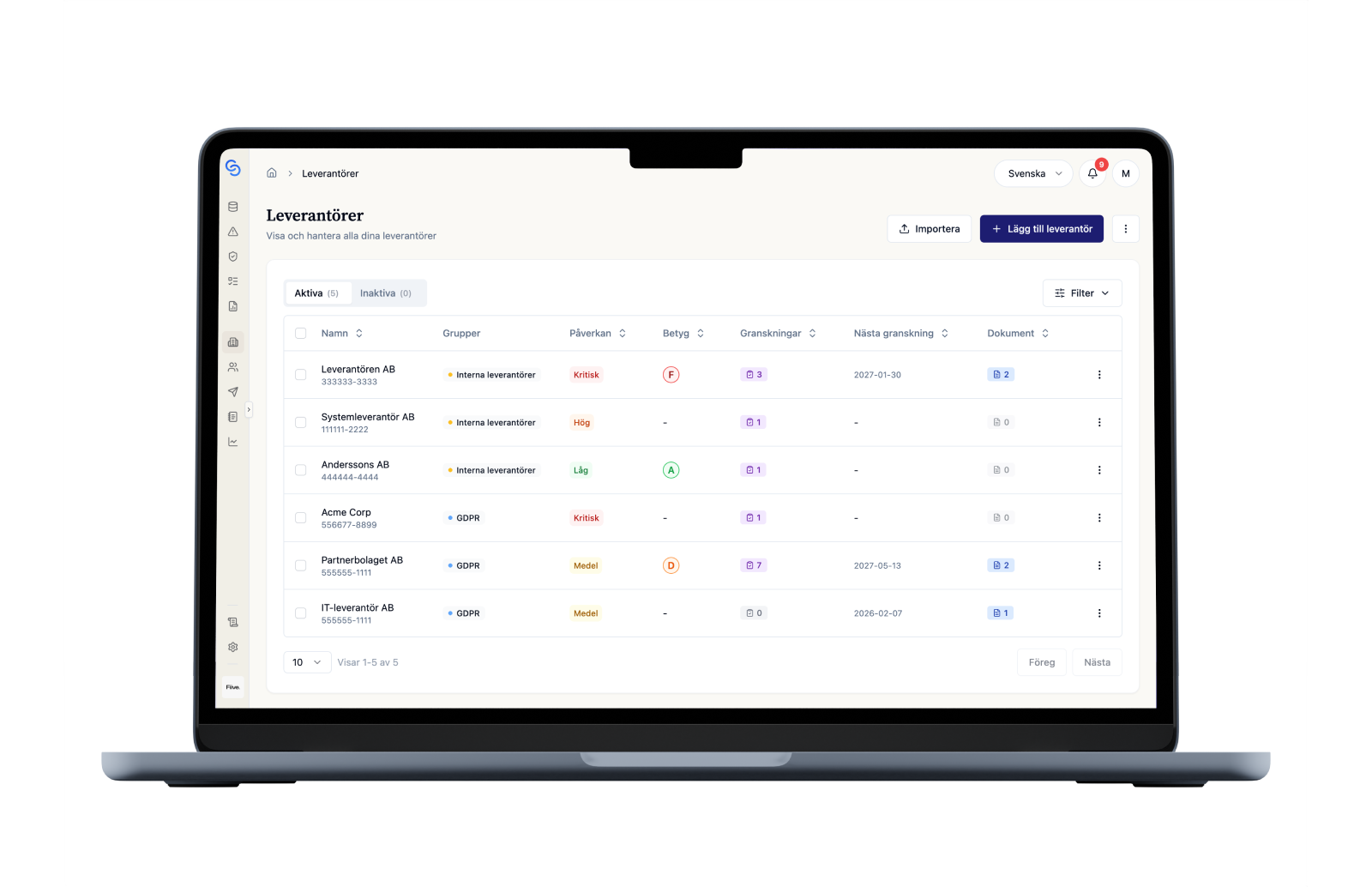
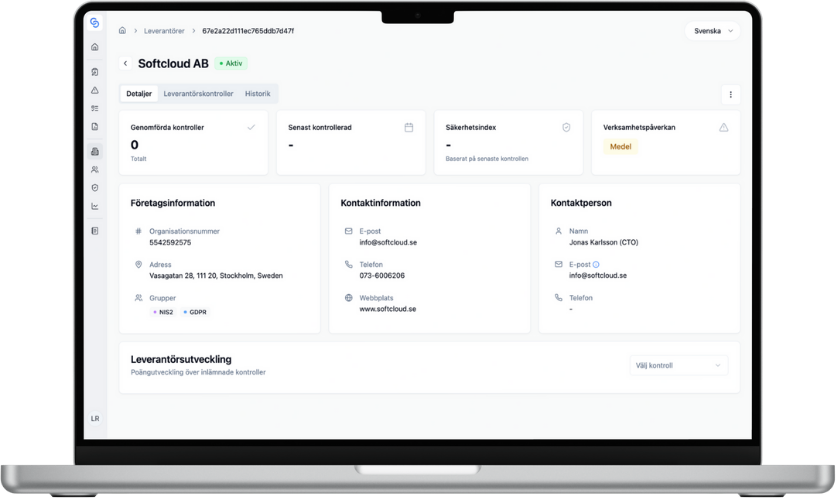
Elevate your supplier follow-up with structured processes and clear visualization. Follow up on KPIs, document deviations, and develop strong supplier relationships systematically. Data-driven follow-up gives better results.
Read more
ChainSec offers a comprehensive system for all aspects of supplier management. From central registry and contract management to proactive risk management and systematic follow-up - everything you need on one platform.
A registry that not only stores contact details but connects suppliers to your critical assets and risks for a holistic view.
Ensure new suppliers meet your security requirements through structured onboarding. Identify risks immediately at the start.

Automate repetitive tasks like reminders, follow-ups, and reporting. Free up time for value-creating work like strategic supplier development and negotiations.
Identify risks before they become problems. Systematic assessments, automatic reminders, and structured action management give you full control over supplier risks and compliance.
When procurement, IT security, legal, and operations work in the same system, better collaboration is created. Everyone sees the same information and can contribute to well-founded decisions.
Fact-based decision support with clear history, KPI follow-up, and documentation of suppliers' performance over time. This simplifies choices during contract renewals and supplier evaluation.
Book a demo and we'll show you how you can handle gap analyses and supplier reviews in one system – instead of Excel. After the demo, you can test the platform for free.
ChainSec gives you a complete system for supplier management where all information is collected in one place. You get a structured supplier registry, tools for contract management with automatic reminders, systematic risk assessment, and follow-up of suppliers' performance over time. Skip managing information in Excel files and different systems - everything is available on one platform.
Yes, ChainSec offers comprehensive possibilities for supplier follow-up. You can track KPIs, document meetings and assessments, and visualize trends over time. This makes it easy to identify both risks and opportunities, and see which suppliers are developing positively or negatively.
ChainSec offers structured tools for proactive risk management. You can create customizable supplier assessments, get automatic reminders for follow-up, and manage actions systematically. Everything is documented to give you full traceability and control over supplier risks and compliance requirements.
The platform is very flexible and can be adapted to your specific needs and processes. You can create your own assessment templates for different types of suppliers, define your own risk criteria, and set up workflows that match your organization's governance. This makes the system work exactly as you want.
We offer a structured implementation process that gets you started quickly. We help you with initial setup, configuration of templates and processes, and import of your existing supplier data.